
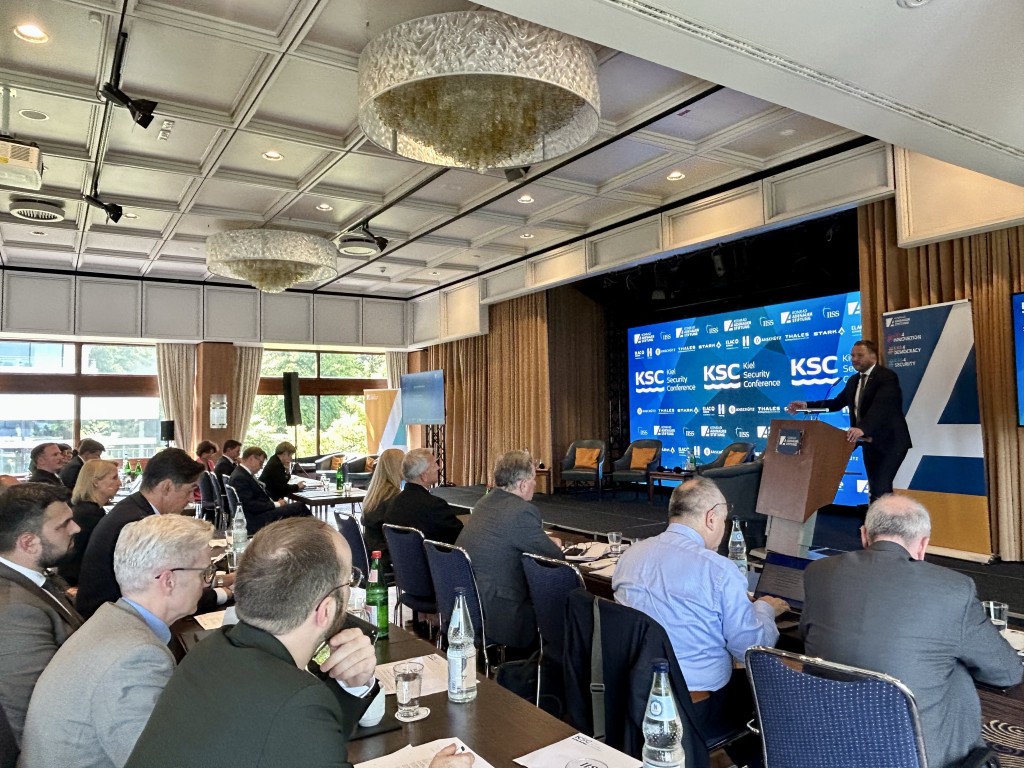
In his keynote speech, Tsahkna stressed that Putin uses two traps to divide the West: offering false hope and spreading fear.
“Over the years, Putin has repeatedly encouraged the West to hope that his aggression would come to an end. This was believed after Russia’s invasion of Georgia, after the annexation of Crimea in 2014, and again following the Minsk agreements. Unfortunately, that hope has always proved misplaced,” said Tsahkna. “The second trap is fear. Russia seeks to intimidate the West with threats of escalation. We must not fall into either of these traps.”
According to the Foreign Minister, Europe should not assume that Russia’s aggression will end simply through dialogue.
“In some circles, there is hope that because Russia is currently in a weaker position, it may be possible to engage it through dialogue. In reality, Europe must maintain strategic patience, increase pressure on Russia, and stand firmly alongside Ukraine. Europe must not allow itself to be drawn into the role of a neutral mediator – that would be yet another Russian trap,” Tsahkna said.
Following his keynote address, Tsahkna took part in a panel discussion on European security and deterrence together with German MP Thomas Röwekamp, former Bulgarian Foreign Minister Georg Georgiev, and Finland’s Ambassador to Germany, Kai Sauer. The discussion was moderated by Dr Christina Krause.
“This week, the world’s attention was focused on a burning Moscow, which is yet another demonstration of Ukraine’s growing military capabilities and its ability to strike targets deep inside Russian territory,” Tsahkna said during the panel discussion. “Ukraine’s military strength is something Europe also needs for its own security. That is why we must increasingly see Ukraine not as a consumer of security, but as a provider of security.”
Yesterday in Kiel, Foreign Minister Tsahkna also met with his German counterpart Johann Wadephul to discuss increasing pressure on Russia, continued support for Ukraine, and strengthening European security.

