
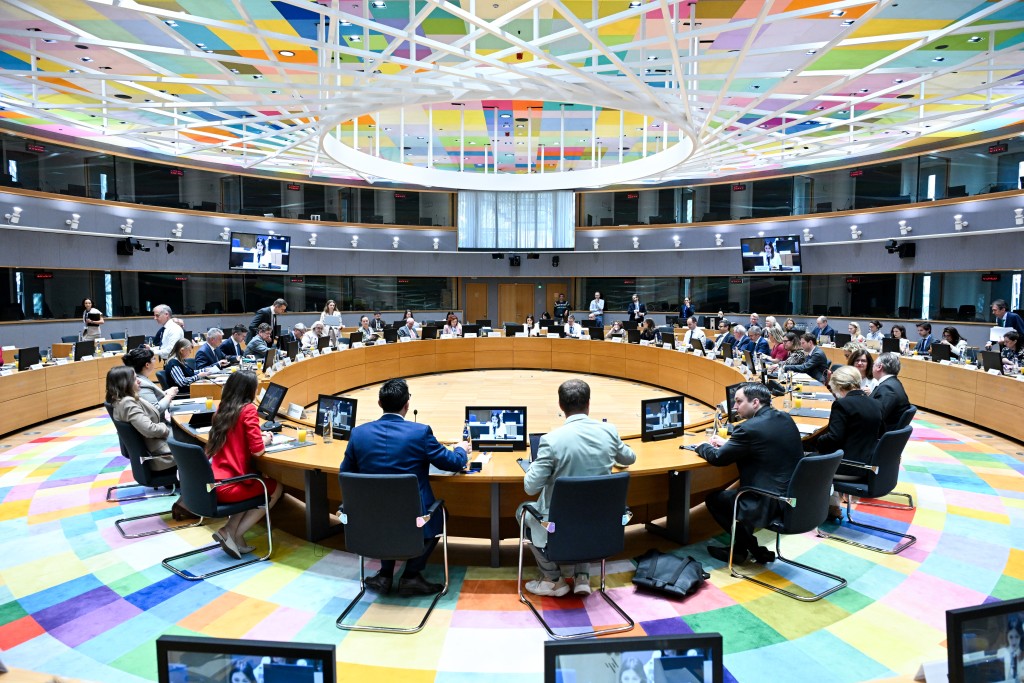
Ahead of the General Affairs Council meeting, Estonia joined the joint declaration of the Friends of Cohesion group, expressing support for increasing funding under national partnership plans in order to strengthen competitiveness, economic growth and security across the European Union.
In the joint declaration by Estonia and 15 other countries, it was stated that a more competitive, prosperous, stronger and safer Europe requires adequate funding that matches the Union’s political ambitions and is adapted to the new geopolitical reality.
“The next MFF must continue to ensure sufficient resources for policies stemming from Treaty obligations, such as Cohesion Policy, Common Agricultural Policy (CAP) and Common Fisheries Policy (CFP), which play a fundamental role in promoting convergence, economic growth and food security. At the same time, the next MFF should support boosting the EU strategic autonomy and continue strengthening EU's competitiveness, climate and digital transition, security and defence, productivity and innovation, as well as ensuring a strong basis for a fully integrated Single Market. It must also respond to new challenges such as security risks, disruptions in global trade, the energy transition and security, migration, reflecting the geopolitical situation,” the declaration states (full text).
“In the Commission’s proposal, Cohesion Policy, CAP and the CFP are the only policies facing reductions in real terms, despite the overall increase in the size of the new MFF. These policies significantly contribute to the key EU objectives and their Treaty-based objectives remain fully relevant. Cohesion Policy and CAP are the most visible EU policies for the EU citizens. In this context, we call for an increase in the Member States allocations under Heading 1 for the Treaty-based policies,” the declaration says.
Speaking at the meeting, the foreign minister stressed that, alongside a focus on reforms and competitiveness, special attention must be paid to the EU’s eastern border regions in light of current geopolitical challenges.
“During the next budget period, we must complete the geopolitically and economically important Rail Baltic railway project, which connects the three Baltic States with the EU single market and key supply chains,” said Tsahkna. “It is also important that the Multiannual Financial Framework ensures a level playing field within the framework of the Common Agricultural Policy.”
In addition to discussions on the EU’s long-term budget for 2028–2034, today’s General Affairs Council meeting also covered preparations for the European Council meeting on 18–19 June, EU–UK relations, and the annual rule of law dialogue focusing on developments in France, Latvia, Croatia and Italy.
Discussing preparations for the June European Council meeting, Tsahkna stressed the need to swiftly open EU accession negotiation chapters with Ukraine and Moldova and to adopt a strong 21st sanctions package, including a full ban on maritime services for vessels transporting Russian oil.
During the discussion on EU–UK relations, Tsahkna said that strong and close relations with the United Kingdom are in the Union’s interest.
This afternoon in Brussels, Foreign Minister Tsahkna will meet NATO Secretary General Mark Rutte to discuss current NATO and security policy issues as well as preparations for the NATO Summit in Ankara in early July.
The foreign minister’s doorstep interview ahead of the General Affairs Council meeting.
Photos from the General Affairs Council meeting.

