
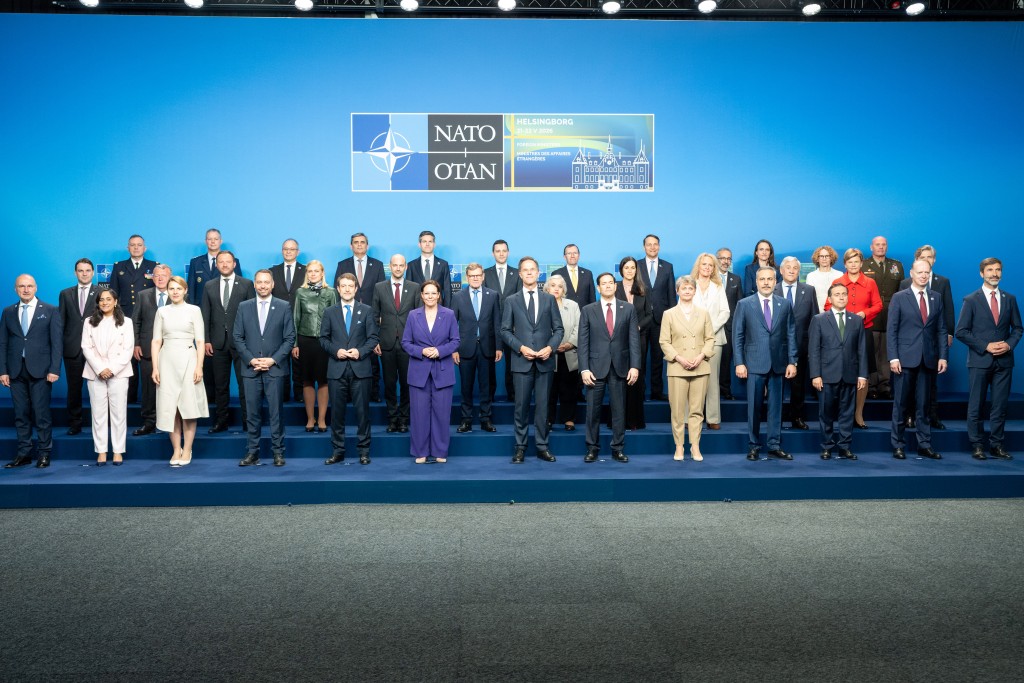
At the meeting, the foreign minister said that Europe will continue assuming greater responsibility for collective security. “European Allies are investing more in defence and contributing increasingly to our shared security. This is necessary to strengthen NATO’s defence capabilities and ensure credible deterrence across Alliance territory,” said Tsahkna. “I also met with United States Secretary of State Marco Rubio and confirmed that Estonia takes its own defence seriously, investing more than 5% of GDP in defence already this year. Both Estonia and the United States remain committed to ensuring the security of the Alliance.”
Tsahkna stressed that any redeployment of US forces must take place in a coordinated manner and that it is essential not to weaken NATO’s deterrence posture on the Alliance’s eastern flank.
“Russia is and will remain a direct and long-term threat to NATO. We must therefore continue strengthening deterrence, increasing defence spending and expanding defence industrial production capacity,” said Tsahkna. “The drone that was shot down over Estonian airspace by Allied forces a few days ago clearly demonstrates that NATO works and that Allies jointly defend our security,” Tsahkna said, adding that Allies have expressed their full solidarity with Estonia.
Tsahkna underlined that credible deterrence requires real military capabilities and readiness. “We recognise those Allies that already spend at least 3.5% of GDP on military defence or have set a clear target to reach that level,” he said.
As part of the NATO foreign ministers’ meeting, a meeting of the NATO–Ukraine Council also took place with the participation of Ukrainian Foreign Minister Andrii Sybiha. Discussions focused on long-term support for Ukraine.
“Ukraine needs long-term, predictable assistance that corresponds to its actual military needs,” Tsahkna said. “Estonia supports the Priority Ukraine Requirements List (PURL) initiative and allocates at least 0.25% of GDP annually to supporting Ukraine. This is an investment in European security.”
According to Tsahkna, Ukraine’s security is inseparably linked to the security of the entire Euro-Atlantic region. “Ukraine’s membership of NATO would be the most effective and credible security guarantee for both Ukraine and Europe as a whole,” he said. “Ukraine is not merely a recipient of support but is increasingly becoming a contributor to our shared security.”
Speaking about the upcoming NATO Summit in Ankara, Tsahkna said he expects concrete decisions on long-term and sustainable support for Ukraine. “Until the aggressor has demonstrated a genuine willingness for peace, pressure on Russia and comprehensive support for Ukraine must continue,” added Tsahkna.
On the margins of the NATO foreign ministers’ meeting, Tsahkna also met Albanian Foreign Minister Ferit Hoxha and Bulgarian Foreign Minister Velislava Petrova-Chamova. Discussions focused on EU enlargement, European security and comprehensive support for Ukraine.
From Helsingborg, Tsahkna will travel to Prague in the Czech Republic to attend the international security conference GLOBSEC, where tomorrow, 23 May, he will speak at a discussion on the long-term security of Ukraine and Europe. Bilateral meetings will also take place on the margins of the conference.
Photos from the NATO foreign ministers’ meeting.
The foreign minister’s doorstep interview ahead of the meeting.

