
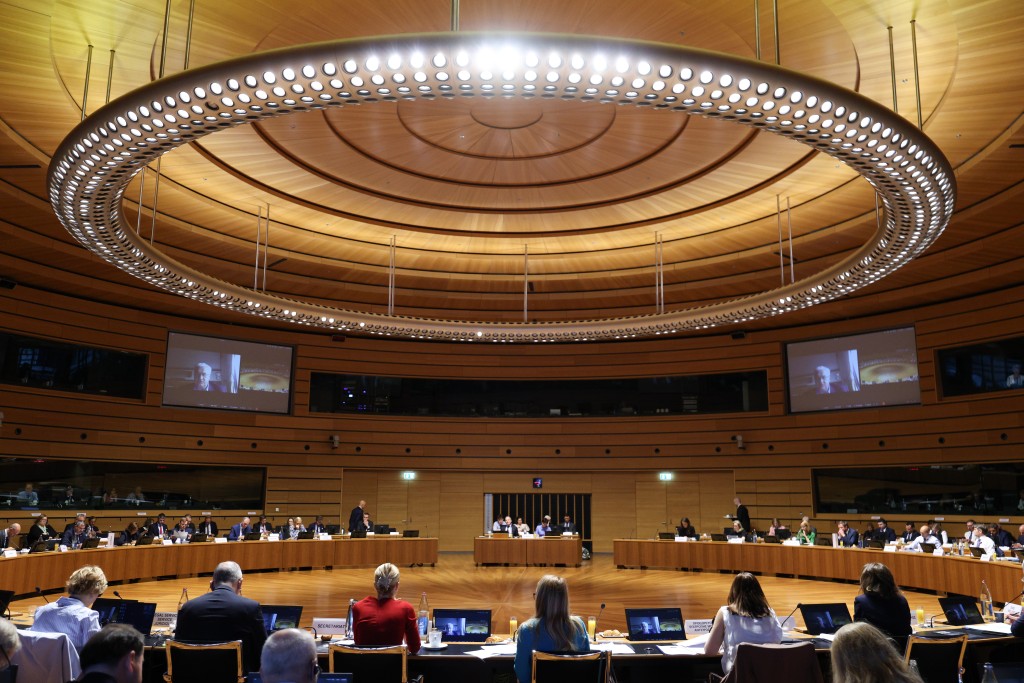
Today, 15 June, Foreign Minister Margus Tsahkna attended the meeting of European Union foreign ministers in Luxembourg, where additional sanctions against individuals and entities linked to Russia were approved. According to the Foreign Minister, this is a step in the right direction, but pressure on Russia must be increased further through the swift adoption of a strong 21st sanctions package.
“By attacking Ukraine again last night, striking the Kyiv Pechersk Lavra and once more taking the lives of innocent people, Russia has demonstrated its brutality and its determination to continue the war. As long as Russia has not changed course, pressure must continue, and today the European Union took decisive steps in that direction.”
According to the Foreign Minister, the EU today approved the addition of 55 names to the sanctions regime targeting those undermining Ukraine’s territorial integrity. The new listings include several Russian businessmen, defence industry companies, entities in third countries facilitating the activities of the shadow fleet, and Russian shipping companies.
A further 11 entities were added to the sanctions regime targeting Russia’s globally destabilising activities known as hybrid activities.
The sanctions list was also expanded to include individuals involved in the systematic dissemination of Russian propaganda narratives, who play a central role in the Kremlin’s information warfare, as well as a Russian state foundation that finances projects supporting the war, including the promotion of Kremlin narratives through Western influencers. Following these additions, this sanctions regime now covers 99 individuals and entities.
Sixteen new names were added to the sanctions regime established in response to human rights violations in Russia. These include individuals linked to the persecution, poisoning and death of Alexei Navalny. The regime now covers a total of 89 individuals and entities.
“With today’s listings, the total number of sanctioned individuals and entities exceeds 2,800. Sanctions that increase pressure on Russia’s military-industrial complex and energy exports are particularly effective because they directly deprive Russia of the resources needed to continue the war. At the same time, it is equally important to strengthen pressure on those responsible for Russia’s information influence operations,” Tsahkna said.
“Work is continuing on the development and rapid adoption of the 21st sanctions package, which will target Russia’s energy exports, financial sector and providers of crypto-asset services,” said Tsahkna. “Estonia’s position is that the EU’s ambitions must continue to include a full ban on maritime services for vessels transporting Russian oil and petroleum products, as well as a ban on exports of alumina to Russia.”
A meeting with Armenian Foreign Minister Ararat Mirzoyan also took place in Luxembourg today to discuss European Union support for Armenia in light of growing pressure from Russia.
“The Armenian people demonstrated in the recent elections a clear desire to continue building an open, democratic and pro-Western society, and the EU remains firmly by Armenia’s side on that path,” Tsahkna said.
The ministers also discussed the situation in the Middle East and relations between the European Union and China.
“The agreement between the United States and Iran is a welcome step towards ending the conflict and reopening the Strait of Hormuz. The swift and full implementation of the agreement is essential for regional stability, global energy security and freedom of navigation,” said Tsahkna. “Today, EU foreign ministers discussed how Europe can contribute to achieving a sustainable and lasting solution.”
Intergovernmental conferences with Ukraine and Moldova will take place in Luxembourg this evening to open the first cluster of accession negotiations with the European Union, known as the Fundamentals cluster.

