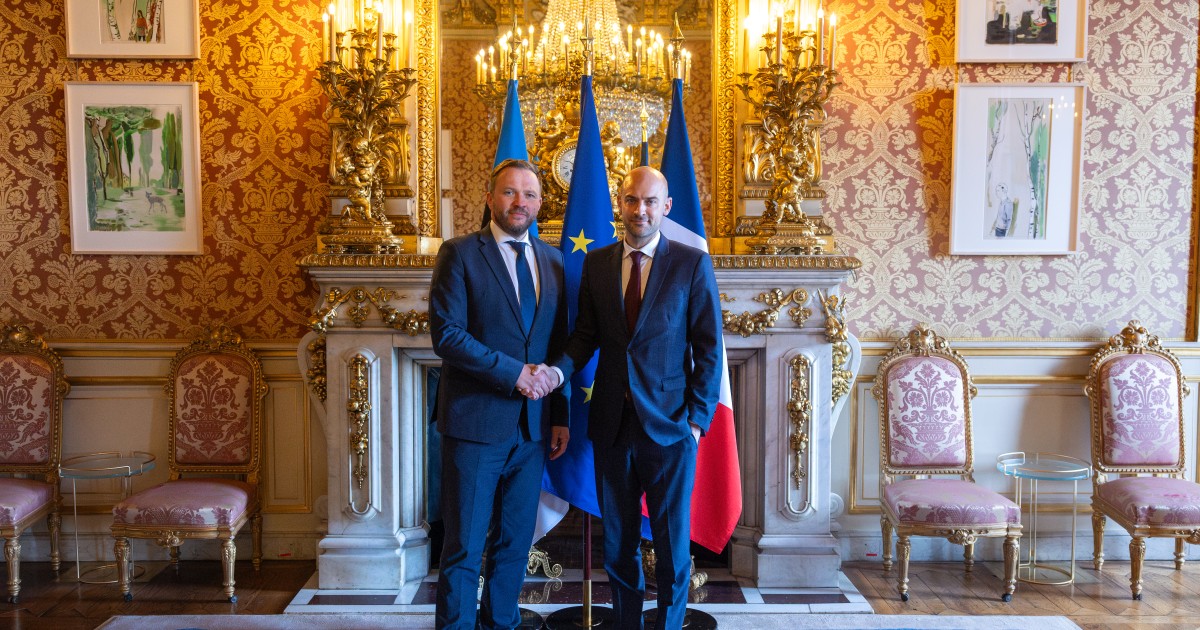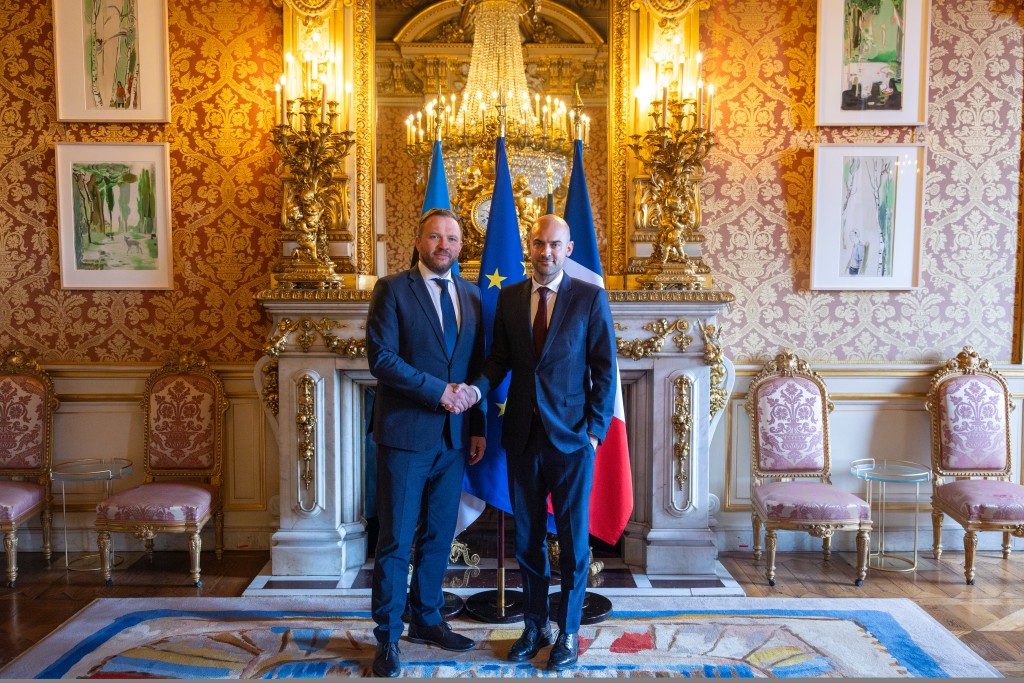
Discussing Russia’s aggression against Ukraine, Tsahkna stressed that, as Putin shows no signs of changing course and continues to intensify attacks on civilians and critical infrastructure, Europe must continue to increase the cost of Russia’s aggression and provide Ukraine with comprehensive support.
“The outcome of the war will have a lasting impact on security across Europe. A just and lasting peace can only be achieved if Ukraine’s sovereignty, territorial integrity and independence are respected, and Ukraine receives credible and effective security guarantees, including through closer integration with Euro-Atlantic structures,” Tsahkna said.
The Foreign Minister thanked France for its continued support for Ukraine, including its contribution to the work of the Coalition of the Willing. “Europe’s support for Ukraine must remain unwavering.”
The Foreign Minister stressed that Europe must continue to isolate Russia consistently. “Pressure on Russia must not ease until the Kremlin abandons its imperial ambitions,” Tsahkna said. “We must tighten political and economic sanctions, continue to isolate Russia in international organisations, restrict Russian citizens’ ability to travel within the Schengen area, and make use of frozen Russian assets to support Ukraine.”
Speaking about bilateral relations, Tsahkna emphasised that Estonia greatly values its cooperation with France within both NATO and the European Union, and considers France’s contribution to the defence of NATO’s eastern flank invaluable, including its participation in NATO’s multinational battlegroup in Tapa. “We see significant potential to deepen cooperation in defence, the economy, education and culture,” he said. Tsahkna added that Estonia looked forward to high-level French participation in the Ukraine Recovery Conference to be held in Tallinn in January.
During his visit, the Foreign Minister also met with France’s Minister Delegate for Artificial Intelligence and Digital Affairs, Anne Le Hénanff, to discuss opportunities for cooperation in digital affairs and innovation, particularly the development and deployment of artificial intelligence.
He also met with Alexis Dutertre, the French President’s adviser on European affairs; Pieyre-Alexandre Anglade, Chair of the National Assembly’s Committee on European Affairs; and selected members of parliament. In addition to European security and support for Ukraine, discussions focused on strengthening Europe’s competitiveness, EU enlargement and negotiations on the next long-term EU budget.