
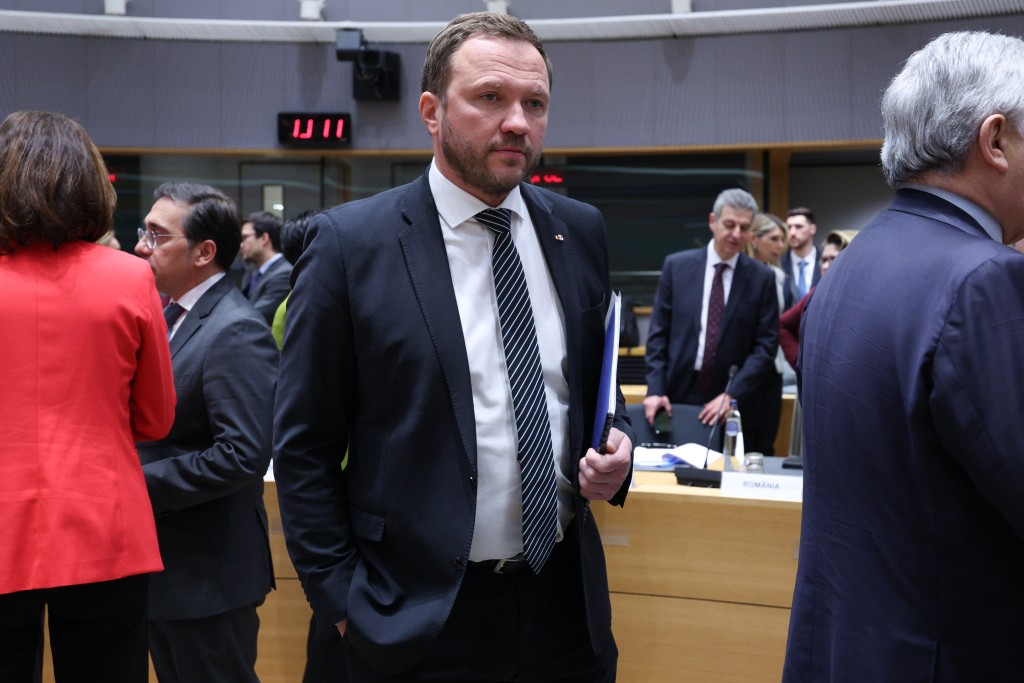
“Last year, the EU significantly increased pressure on Russia by adopting four sanctions packages. Today we see that Russia’s economic growth has stagnated, inflation remains high, and more than half of the liquid assets of the National Wealth Fund have already been spent,” Tsahkna said.
“Russia’s oil and gas revenues fell by 22% in December last year compared with the previous year, which means Russia has ever fewer financial resources available to wage war. This situation must be seized upon and the 20th sanctions package must be adopted swiftly to further reduce Russia’s energy revenues,” Tsahkna said. “The next package should include sanctions against Russia’s energy companies, the shadow fleet and those enabling its operations, and its central element must be a maritime services ban on vessels exporting Russian energy products.”
The foreign minister added that against the backdrop of Russia’s continued military terror, action must be taken to strengthen Ukraine’s air defence capabilities and support its energy sector.
“Russia wants to bomb its way into a better position at the negotiating table. It is the task of Ukraine’s supporters to ensure that this does not succeed,” the foreign minister said.
Tsahkna also raised the need to impose a ban on entry into the Schengen area and on issuing residence permits to all Russian citizens who have fought for Russia against Ukraine.
“The infiltration into Europe of former Islamist fighters or those who took part in the Balkan wars has already shown us the kind of threat that individuals involved in atrocities pose to European societies and security,” Tsahkna said. “Among those fighting for Russia are convicted criminals sent from prisons to the front, as well as individuals who are clearly hostile to Europe. Former fighters represent a suitable recruitment pool for Russian intelligence services and can be used for sabotage, subversion, and participation in organised crime on European soil.”
“We must not repeat past mistake and must ensure that Europe’s door remains closed to Russian soldiers who have fought in Ukraine,” Tsahkna said.
“This step would also serve as a clear deterrent. Any man considering fighting on Russia’s behalf would think twice about whether it is worth ending up on the Schengen blacklist,” Tsahkna said.
The foreign ministers also discussed the situation in the African Great Lakes region and in the Middle East. Among other decisions, the European Union decided today to list the Islamic Revolutionary Guard Corps (IRGC) as a terrorist organisation.
In addition, Foreign Minister Tsahkna raised at the meeting the need for the EU to take into account, in its relations with third countries, those countries’ stance and actions regarding Russia’s aggression, citing relations with Cuba as a primary example.
“Cuba directly and openly supports the war narrative of the aggressor state Russia and has intensified its cooperation with Russia. In addition, the EU cannot ignore Cuba’s continued and worsening human rights violations, with the most striking examples being the imprisonment of participants in the peaceful protests of 2021 and restrictions on freedom of expression and assembly. The EU must review its current Cuba policy,” Tsahkna said.
At a meeting with UN High Commissioner for Human Rights Volker Türk, the protection and promotion of human rights were discussed.

