
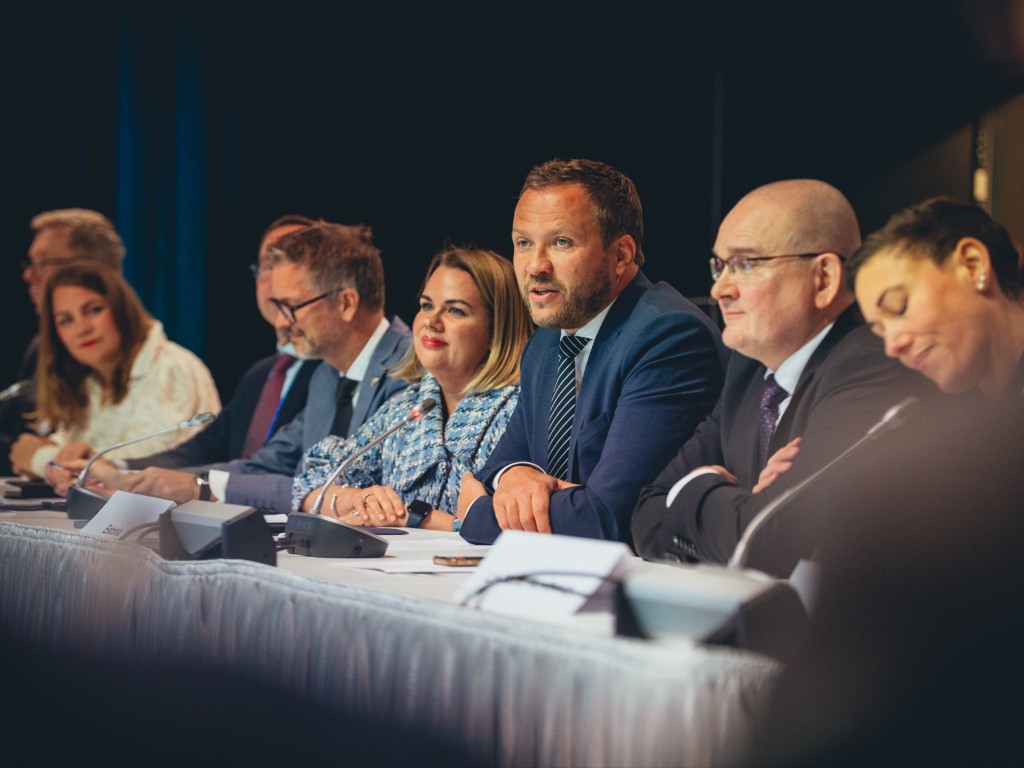
In his opening remarks, Minister Tsahkna emphasised that access to the internet and freedom of expression are in decline worldwide. “Looking at our eastern neighbour, Russia, we see that opportunities for self-expression in the digital space are increasingly restricted and the voices of democratic forces silenced,” Tsahkna noted. “Leaders of authoritarian states are increasingly using internet access as a weapon – cutting off citizens’ access to a free internet and spreading disinformation and propaganda.”
The foreign minister added that, against the backdrop of rising cyber and hybrid attacks, greater attention must be paid to identifying perpetrators and holding them accountable through sanctions or other diplomatic measures. “International law must apply in cyberspace, and all violations must be met with an appropriate response,” Tsahkna stressed.
Minister Tsahkna also highlighted the need to ensure that providers of digital solutions in both the public and private sectors operate transparently and inclusively, earning trust and respecting the privacy of individuals and security. “Estonia consistently stands for free and responsible digital governance,” the minister stated.
The Freedom Online Coalition was established in 2011 with the aim of protecting and promoting internet freedom and shaping international decisions based on this principle. Estonia is one of the 15 founding members. Today, the coalition comprises 42 countries committed to upholding human rights in the digital world.
In 2025, Estonia serves as chair of the FOC, focusing primarily on sharing its experience in building an e-state to help reduce the global digital divide. Estonia also actively advocates for freedom of expression in cyberspace and supports broader and freer access to the internet. As part of its chairmanship, Estonia has organised over 60 events.

